Shih Tzu Colors Explained: Every Coat Color & Marking
If you have ever scrolled Shih Tzu photos and wondered how one breed comes in so many colours, you are not imagining it. The Shih Tzu has one of the widest colour ranges of any breed — from solid black to solid white and nearly everything in between — and the American Kennel Club (AKC) accepts all of them. No colour is “correct” and none is a fault — two puppies from the same litter can look like entirely different breeds. This guide covers every main colour, the famous forehead blaze, why puppy coats change, and what “rare” really means when a breeder says it.
The Solid Colors
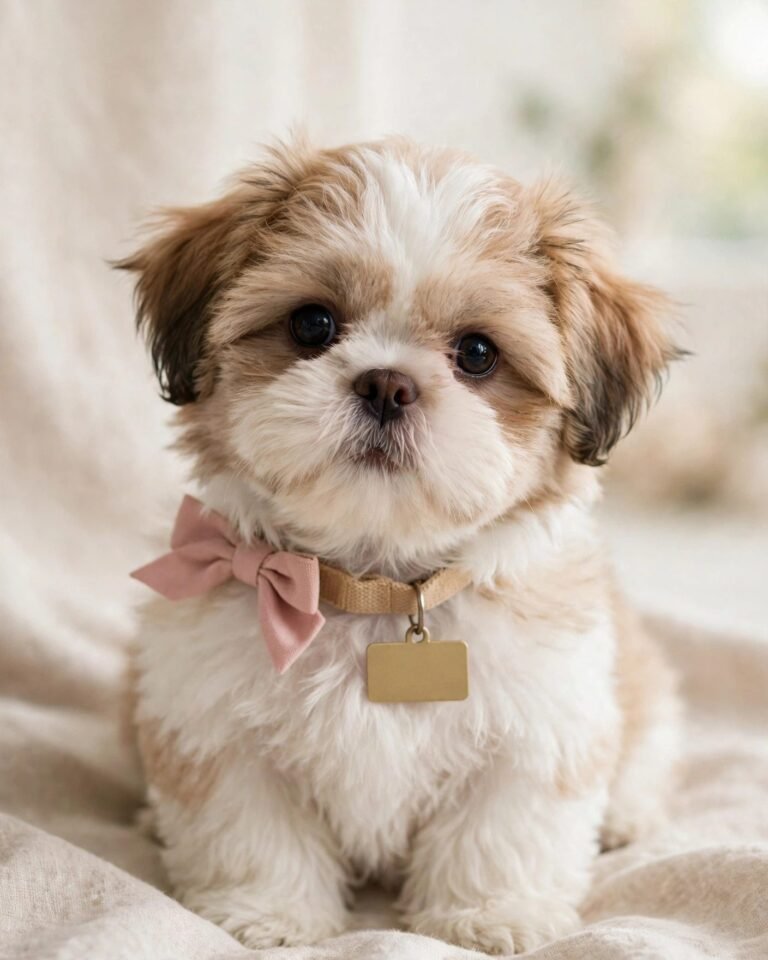
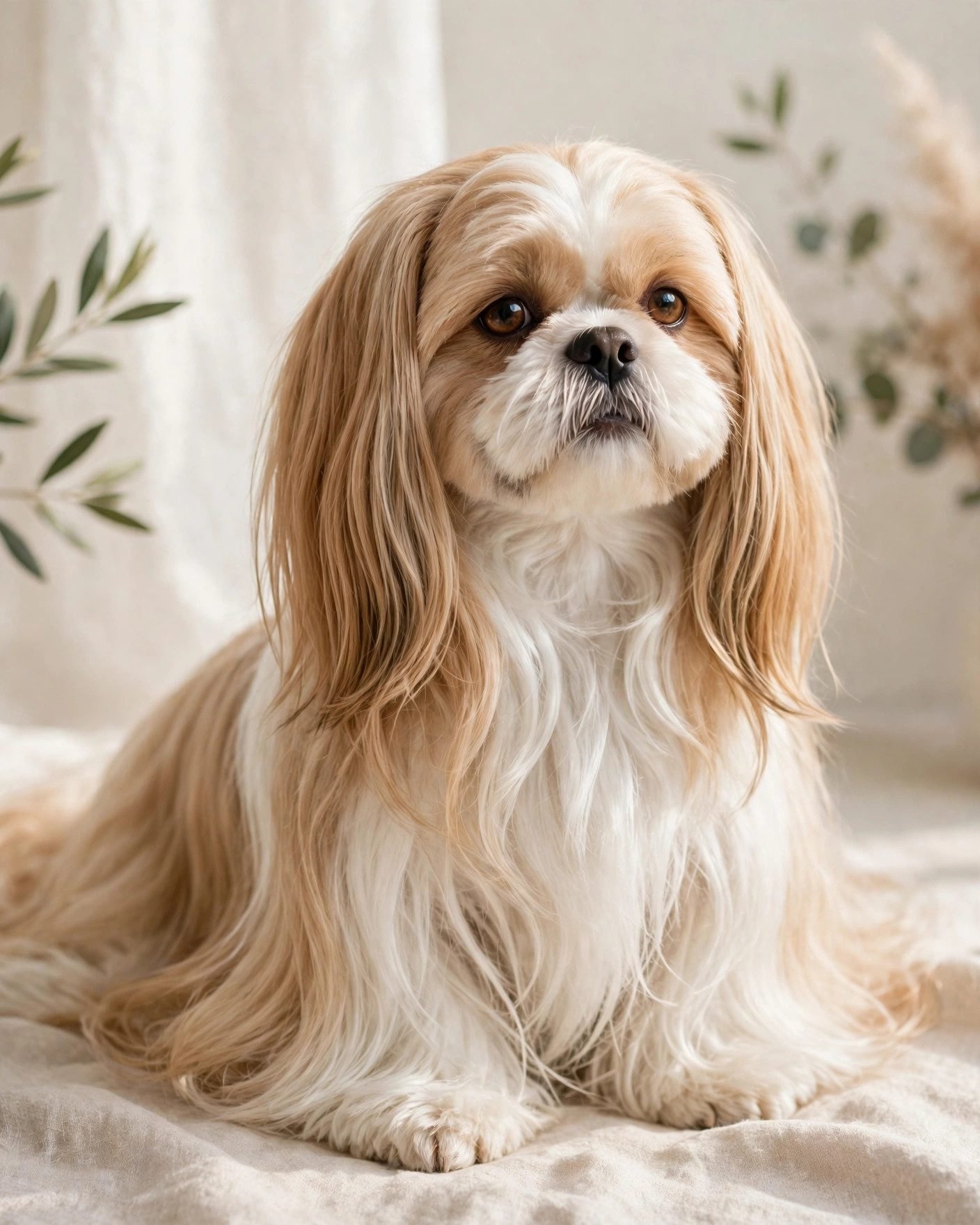
Gold. The classic Shih Tzu colour — warm, honeyed, and the one most people picture first. Gold ranges from pale cream-gold to deep reddish gold, and it is often paired with a white chest, blaze, or paws. A gold Shih Tzu with a white blaze is the breed’s most iconic look.
White. Solid white Shih Tzus are striking, and they photograph beautifully — but the coat shows every speck of dirt, every tear stain, and every muddy paw. White dogs need more frequent face wiping and a little more bath planning than darker dogs, though the routine itself is the same.
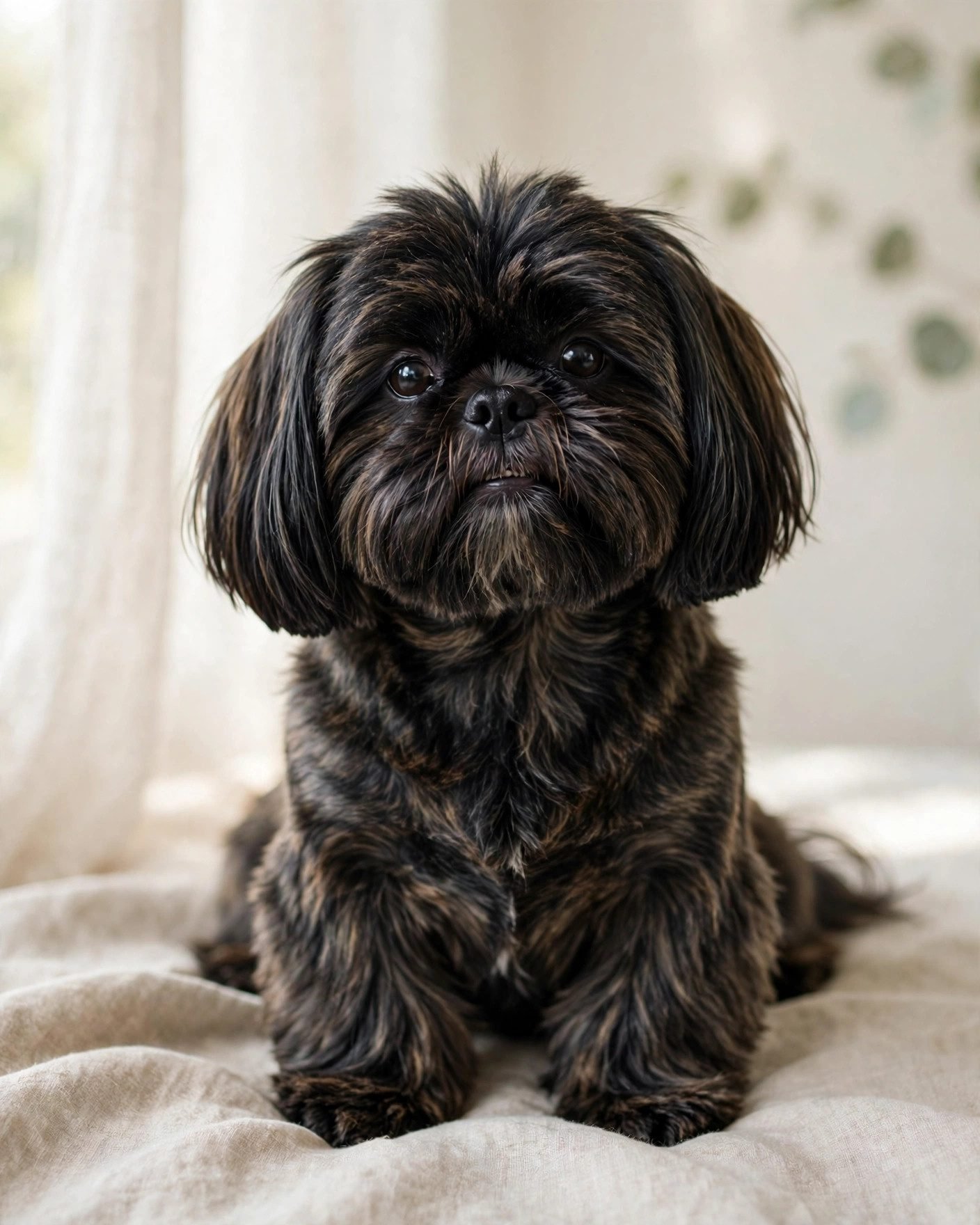
Black. Solid black Shih Tzus are less common than black-and-white ones, and they are gorgeous — a glossy black coat with dark eyes and a black nose. Black coats fade in strong sun, so a black Shih Tzu outdoors a lot may develop a reddish tinge on the ears and back. That is sun bleaching, not a colour change, and it is harmless.
Silver. A cool, pale grey-silver coat that looks almost metallic in sunlight. True silver is one of the less common solid colours, often confused with grey or faded black. Silver puppies are frequently born much darker and lighten as they grow — more on that below.
Liver. A warm chocolate-brown colour, sometimes called chocolate. Liver Shih Tzus usually have a brown or liver-coloured nose and lighter eyes to match, rather than the black nose and dark eyes of most other colours. Liver is an accepted AKC colour, and it is one of the colours breeders most often call “rare” — see the warning about that word below.
Blue. Despite the name, blue is not bright blue — it is a diluted, slate-grey colour, like a soft grey-blue wash over the coat. Blue Shih Tzus usually have a grey or blue-grey nose. True blue is uncommon, and many dogs sold as “blue” are really silver or grey.
Red. A rich, deep reddish coat, darker and warmer than gold. Red is often confused with dark gold — even breeders disagree about where gold ends and red begins. If your dog’s coat glows copper in sunlight, it is probably red.
Gray. A mid-tone grey, darker than silver and cooler than blue. Gray Shih Tzus are often born black or dark grey and lighten over the first year. Gray and silver get mixed up constantly; the practical difference is that silver is paler and cooler, gray is deeper and warmer.
Parti-Colors: Two and Three Colors Together
Most Shih Tzus are not solid at all — they are parti-colored, meaning two or more colours in patches. The most common combinations:
| Combination | What it looks like |
|---|---|
| Gold & white | The classic — gold body with white chest, blaze, paws, or tail tip |
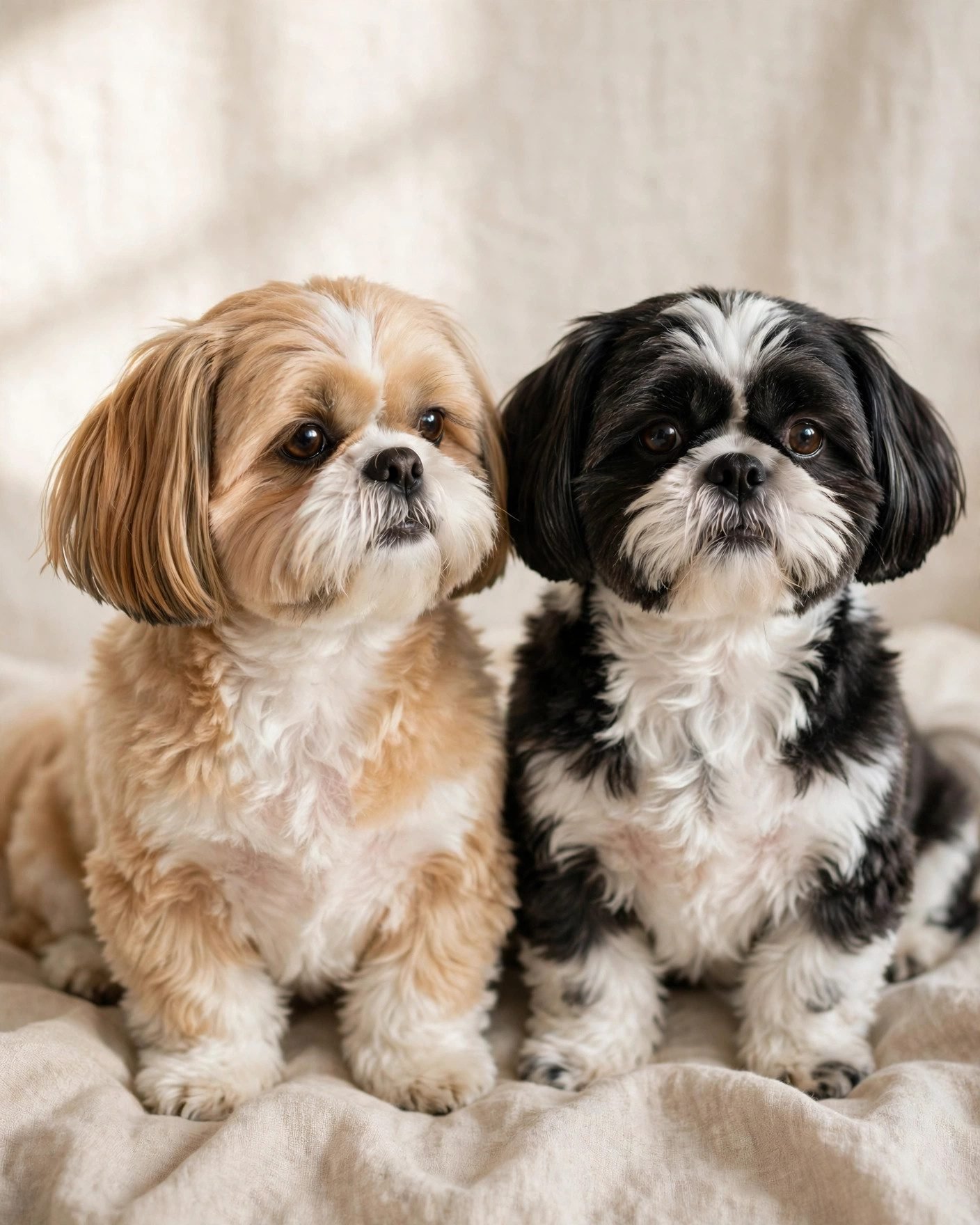
| Black & white | Bold contrast, often with a white blaze and white chest |
| Silver & white | Soft, pale, almost frosted look |
| Liver & white | Warm chocolate patches on white |
| Brindle & white | Striped patches on a white base |
| Tri-color | Three colours, usually black, white, and gold or tan |
Parti-colors follow no fixed pattern — the patches land where they land, which is why two littermates can look completely different. White markings on the chest, paws, and tail tip are sometimes called “Irish markings” in dog-breeding language, and they appear across many breeds, not just Shih Tzus.
Brindle: The Striped Coat
Brindle is not a colour — it is a pattern. A brindle Shih Tzu has stripes of a darker colour laid over a lighter base, like a tiger pattern in miniature. The most common brindle is black stripes over gold or fawn, but brindle also appears over silver, liver, and red bases. Brindle puppies often look almost solid dark at birth, and the striping becomes clearer as the coat grows out.
The Star of Buddha: The White Forehead Blaze
The white blaze on a Shih Tzu’s forehead has a legend attached to it. According to the old story, the Buddha owned a small dog — said to be a Shih Tzu-type dog — that turned into a lion to protect him, and the white mark on the forehead is where the Buddha touched the dog. Breeders and owners call it the “Star of Buddha,” and it is considered a lucky, desirable marking. Whether or not you believe the legend, the blaze is genuinely common — most parti-colored Shih Tzus have one — and it is one of the breed’s most charming features. A blaze does not affect health, temperament, or show quality; it is simply a beautiful marking with a good story.
Why Puppy Coats Change Color
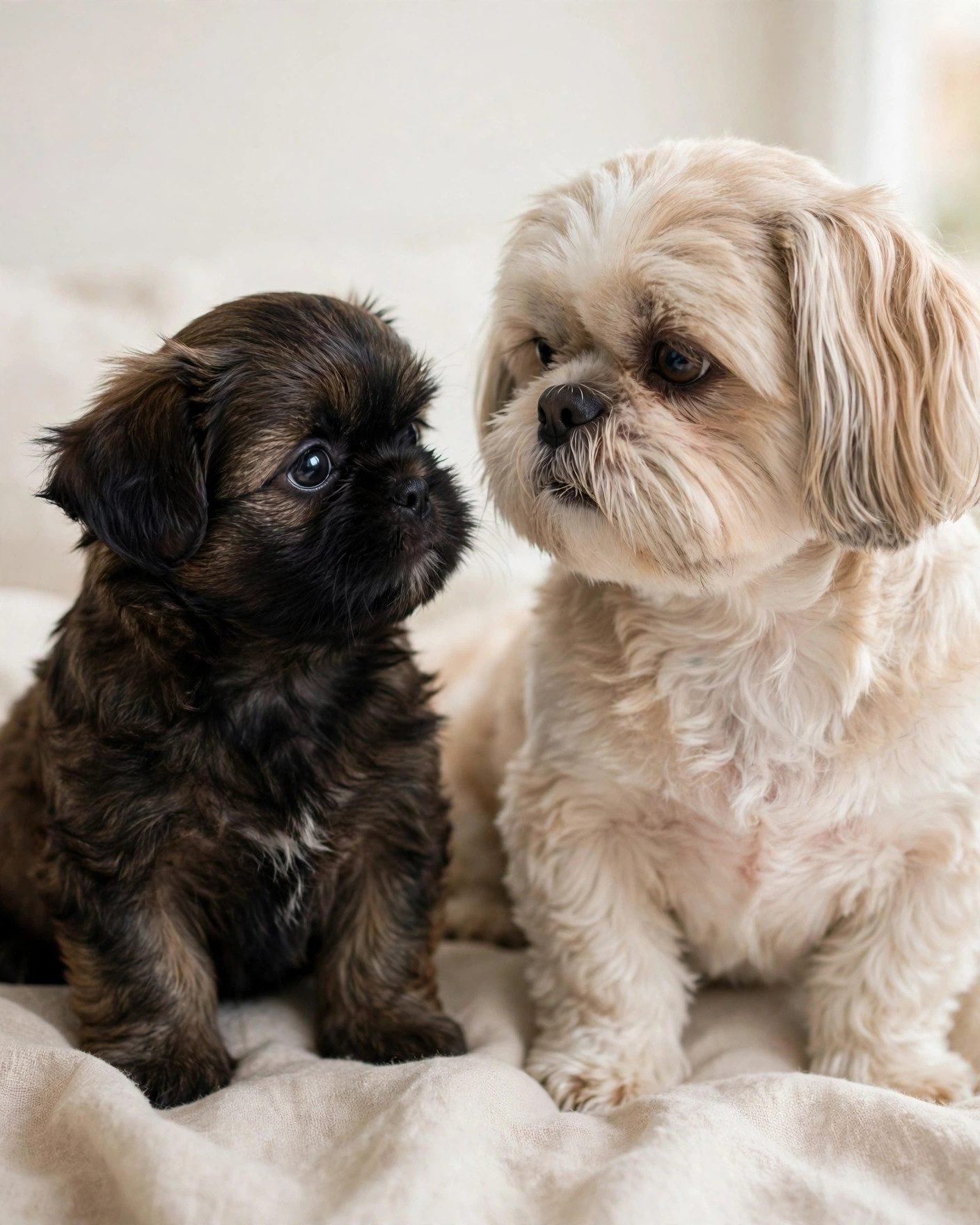
If your Shih Tzu puppy’s coat does not look like the adult dog you expected, do not panic — it is supposed to change. Shih Tzu puppies are often born darker than they will end up, and the coat lightens and shifts as the puppy coat gives way to the adult coat. The change usually starts around four to six months and settles by about ten months, though some dogs keep shifting into their second year. Black puppies often fade to grey or silver, dark gold puppies lighten to pale gold, and brindle patterns sharpen as the coat grows. The adult colour is usually visible at the roots — part the coat and look at the hair nearest the skin, which shows where the colour is heading. This is also why buying a puppy “for its colour” is risky: the puppy you take home at eight weeks is not the colour it will be at a year old, and any breeder guaranteeing an adult colour from a young puppy is guessing.
“Rare” Colors: What Breeders Mean (and What They Don’t)
You will see breeders advertising “rare” Shih Tzu colours — liver, blue, solid black, solid white — often at a higher price. Here is the honest version: some colours are less common, but no colour is better, healthier, or more valuable in any official sense. The AKC accepts all Shih Tzu colours equally, and colour has no link to temperament, intelligence, or health. A higher price for a “rare” colour is a marketing choice, not a quality guarantee — and sometimes a red flag for a breeder who prioritises colour over health testing. Choose a breeder for health clearances, temperament, and living conditions, not for a colour label. The best Shih Tzu is the healthy one, whatever colour it happens to be.
Grooming Notes by Coat Type
Colour does not change the grooming routine much — but coat shade changes what you notice.
- White and light coats show tear stains, dirt, and staining around the mouth fastest. Wipe the face daily, keep the beard clean after meals, and use a gentle whitening shampoo occasionally — not every bath, or the coat dries out.
- Dark coats hide dirt well but show dandruff, dust, and loose hair more clearly.
- Long, flowing coats (any colour) need daily brushing to prevent mats, especially behind the ears and under the legs. Colour makes no difference to matting — length does.
- Short cuts (any colour) are lower maintenance, and the colour often looks richer once the coat is trimmed and healthy.
For the full grooming picture — cuts, lengths, and what to ask your groomer — see our 25 Shih Tzu haircut ideas and the teddy bear cut guide.
Frequently Asked Questions
What colors do Shih Tzus come in?
All of them, nearly. The AKC accepts gold, white, black, silver, liver, blue, brindle, red, and gray, plus any combination — parti-colors with two or three colours are the most common of all. No colour is a fault, and none is officially “better” than another.
What is the Star of Buddha on a Shih Tzu?
The white blaze on the forehead, named for the legend that the Buddha touched his small dog’s forehead, leaving a white star-shaped mark. A common, lucky marking — charming, but it does not affect health or quality.
Do Shih Tzu puppies change color?
Yes, almost always. Puppies are usually born darker and lighten as the adult coat comes in, settling around ten months. Black puppies often fade to grey or silver, dark gold lightens to pale gold. Check the hair at the roots to see where the colour is heading.
What is the rarest Shih Tzu color?
Liver and blue are among the less common colours, and solid black and solid white are less common than parti-colors. But “rare” is a marketing word, not a quality mark — the AKC treats all colours equally, and a higher price for a rare colour does not mean a healthier or better dog. Choose a breeder for health testing, not colour.
Do different Shih Tzu colors need different grooming?
Not really. The routine is the same for every colour: regular brushing, face wiping, and baths every few weeks. Light coats show stains faster and need more face wiping; dark coats show dandruff and loose hair more clearly. Length matters far more than colour — a long coat mats whatever shade it is.
Final Thoughts
The Shih Tzu’s colour range is part of what makes the breed so much fun — no two dogs look quite alike, and the puppy you bring home will surprise you as its coat settles. Learn the colour names, enjoy the Star of Buddha legend, and do not pay extra for a “rare” label that means nothing official. The colour that matters is the one you love looking at every day — and on a healthy, happy Shih Tzu, every colour looks good.