Do Shih Tzus Shed? Coat & Allergy Facts
If you are considering a Shih Tzu and you hate finding dog hair on everything you own, this is the article you need. The short answer is good news: Shih Tzus shed very little. But the full answer has a twist — the hair they do lose mostly does not fall out. It stays trapped in the coat, and if you do not brush it out, it turns into mats. So a Shih Tzu will not cover your sofa in hair, but it will demand a brush instead. Here is the whole picture: how much they really shed, why their coat behaves the way it does, what “hypoallergenic” actually means, and how to keep both the dog and your allergies happy.
The Short Answer: Very Little — But Not Zero
Shih Tzus are one of the lowest-shedding breeds around. You will not find tumbleweeds of hair drifting across your floor the way you would with a Labrador or a Husky, and most owners report almost no hair on furniture or clothes. But “low-shedding” is not “no-shedding.” Every dog loses some hair — Shih Tzus just lose far less of it onto your home, for a reason that comes down to the kind of coat they have.
Hair, Not Fur — And Why That Matters
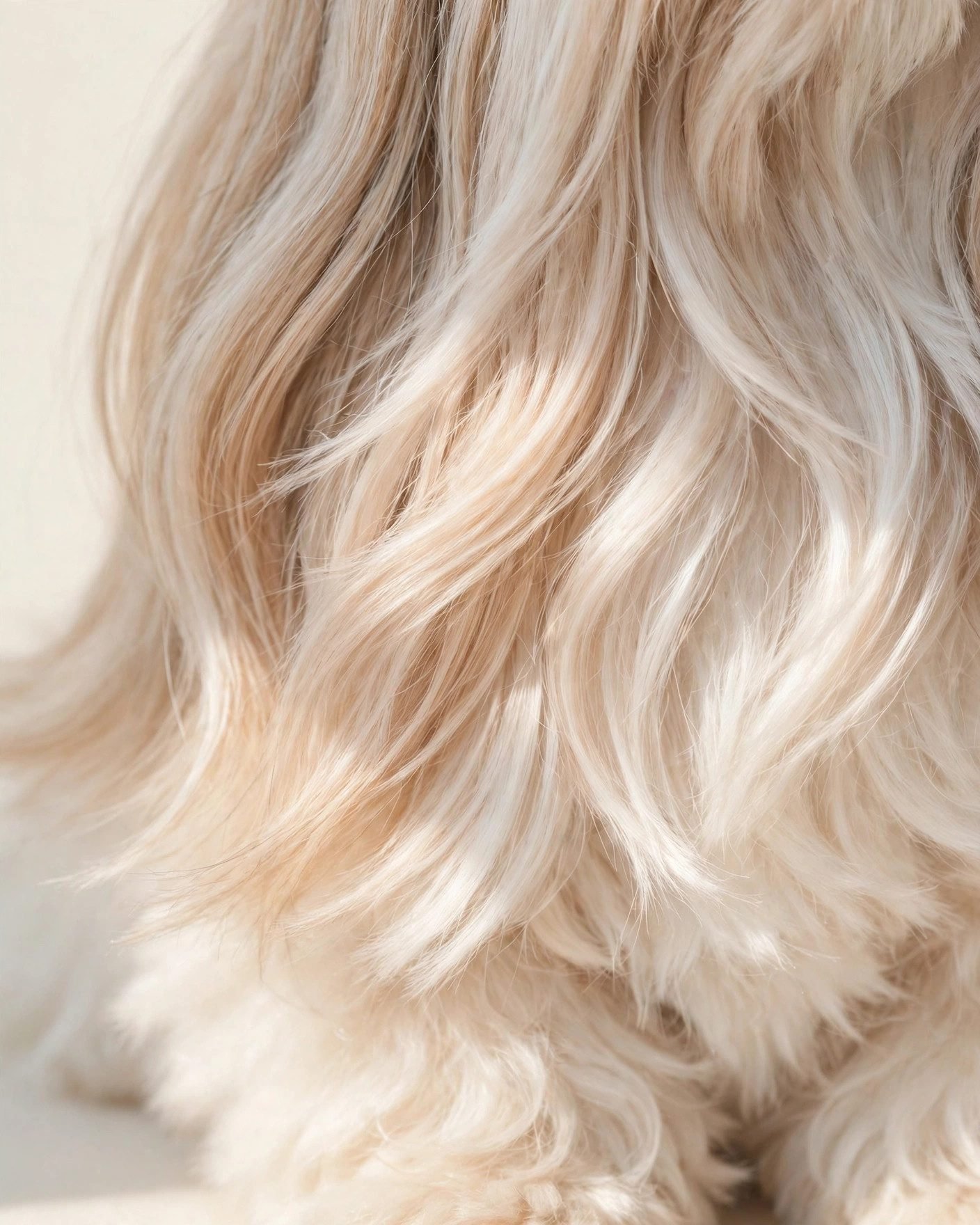
Dogs have either fur or hair, and the difference is in the growth cycle. Fur grows to a set length, stops, and falls out — that is shedding. Hair keeps growing, the way human hair does, and falls out far less often. Shih Tzus have hair, not fur, which is why they shed so little and why their coats grow long enough to reach the floor if you let them. It is also why a Shih Tzu’s coat needs regular cutting: unlike fur, it does not stop at a convenient length on its own. For the full guide to cuts and lengths, see our 25 Shih Tzu haircut ideas and the teddy bear cut guide.
Where the Loose Hair Goes: Shedding vs Matting
Here is the twist. A Shih Tzu’s loose hair does not vanish — it gets caught in the surrounding long coat instead of falling to the floor. That is why your sofa stays clean while your dog’s coat quietly tangles underneath. Left alone, trapped loose hair felts together into mats, especially in the friction zones: behind the ears, under the legs, around the collar, and on the belly. Mats are not just ugly — they pull on the skin, trap moisture, and hurt, and a badly matted coat sometimes has to be clipped off entirely.
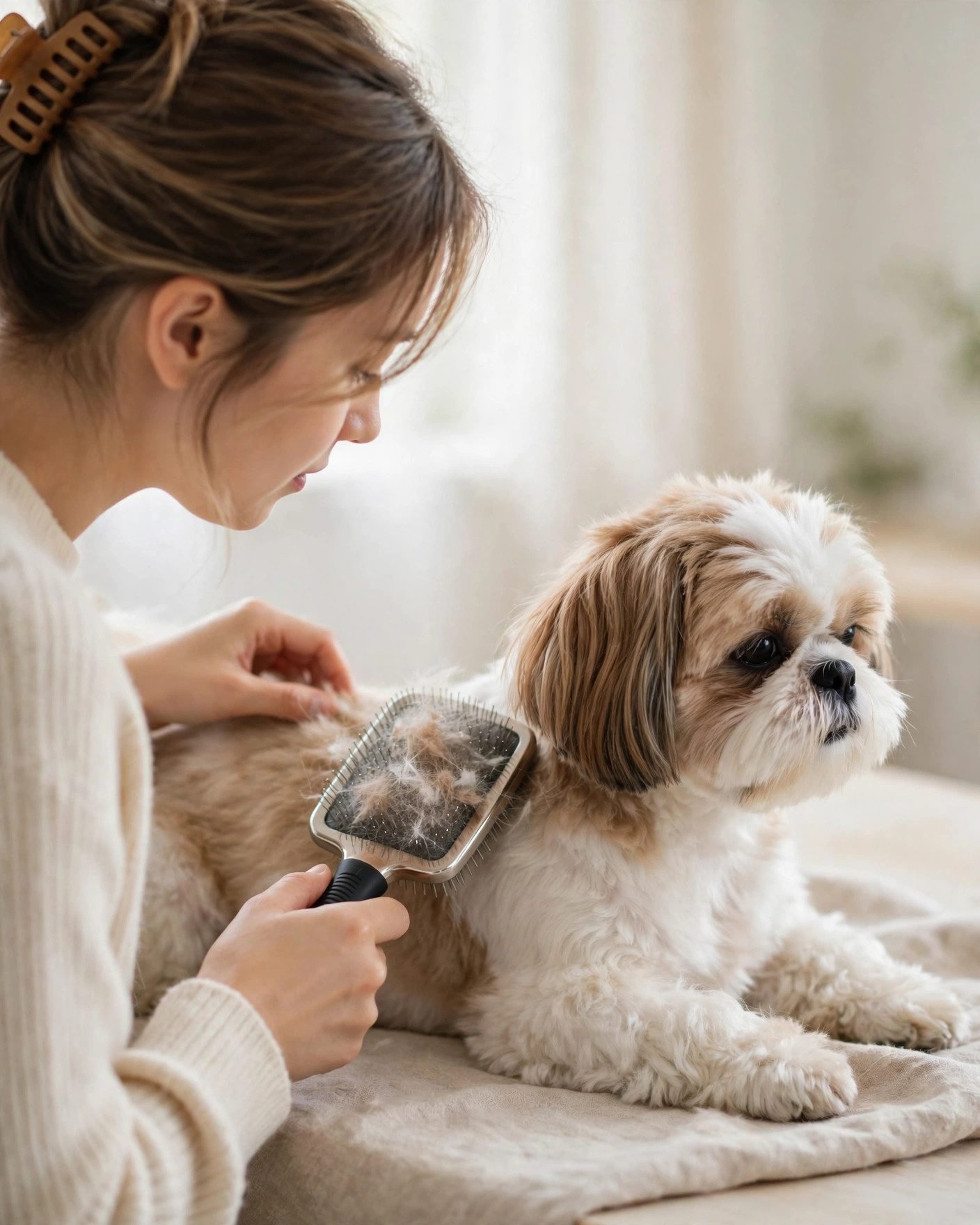
The fix is gloriously simple: brushing. A slicker brush every two to three days for short coats, daily for long coats, removes the loose hair before it can mat — and the brush in the hero photo above shows exactly what comes out in a normal session. That hair on the brush is the shedding you are not seeing on your sofa. Think of brushing as the shedding, collected on your terms instead of the dog’s.
Are Shih Tzus Hypoallergenic?
This is where honesty matters. No dog breed is truly hypoallergenic — not Shih Tzus, not Poodles, not any breed a breeder labels that way. What triggers dog allergies is not mainly the hair itself, but the proteins in a dog’s saliva, skin flakes (dander), and urine. Every dog produces dander, including Shih Tzus. What makes Shih Tzus a better choice for many allergy sufferers is that their low shedding spreads less dander around the house: less hair on the floor and furniture means less dander riding on it. Many people with mild dog allergies live happily with Shih Tzus, and many do not — allergies are individual, and the only reliable test is spending real time with the breed before you commit. Visit a breeder or a friend’s Shih Tzu, sit with the dog for an hour, and see how you feel the next day. Do not buy a dog on the strength of a “hypoallergenic” label alone.
Allergy Management: Living With a Shih Tzu When You Sneeze
If you or a family member has mild allergies, these steps keep a Shih Tzu household comfortable:
- Brush outside or in one room. Brushing releases dander and loose hair, so do it somewhere easy to clean — outside is ideal — and wash your hands after.
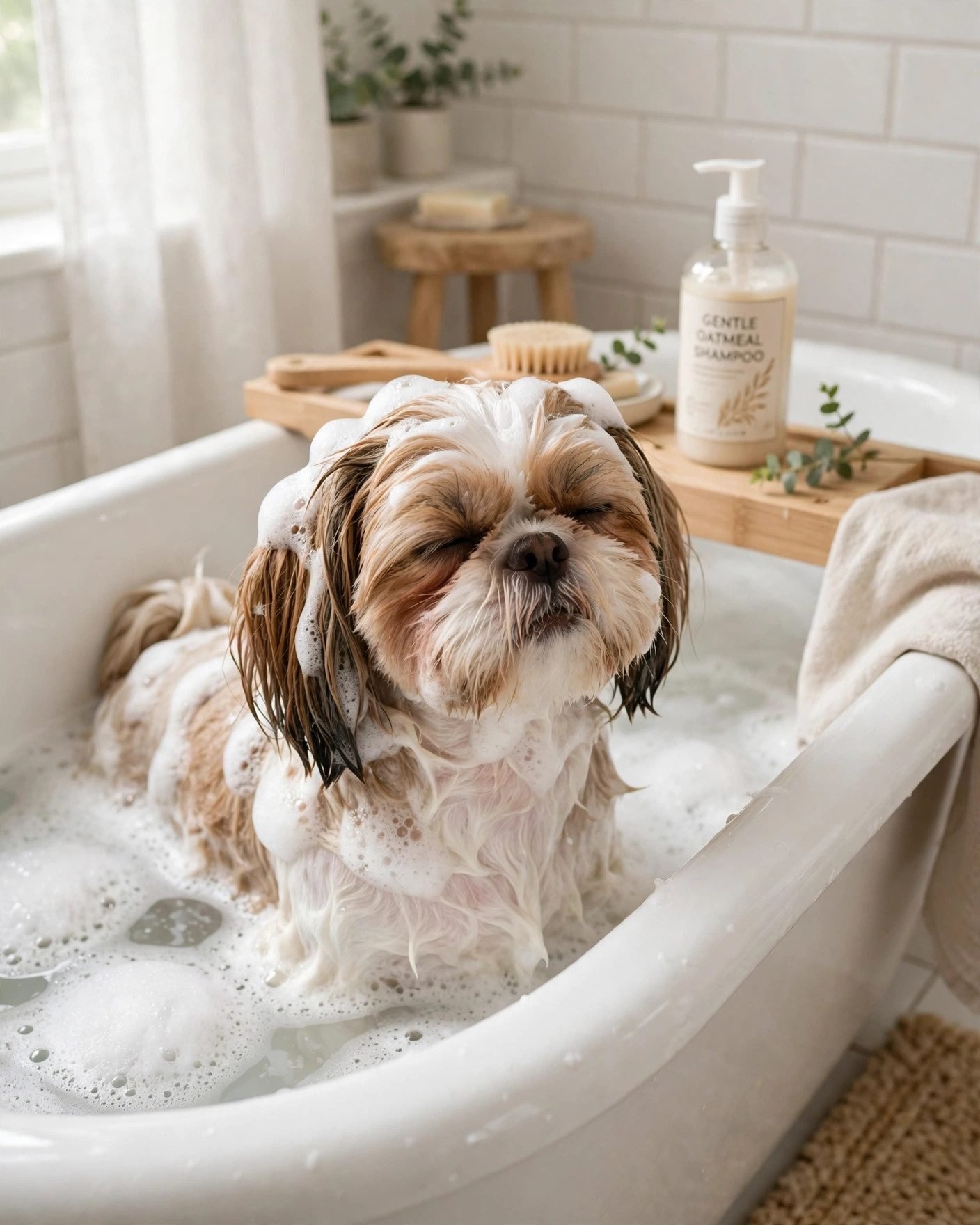
- Bathe every two to four weeks. Regular baths wash dander off the coat before it spreads. Use a gentle, dog-safe shampoo, and do not over-bathe: too-frequent washing dries the skin, which produces more dander, not less.
- Wash bedding weekly. Your dog’s bed, blankets, and any sofa covers they sleep on collect dander fast. A hot weekly wash keeps the load down.
- Run an air purifier with a HEPA filter in the rooms you spend the most time in, especially the bedroom. It will not eliminate dander, but it cuts the airborne share noticeably.
- Keep the bedroom dog-free if allergies are serious. This is the hardest rule and the most effective one. A dander-free sleeping space gives your body eight hours a night to recover.
- Vacuum with a HEPA-filter vacuum a couple of times a week, including soft furnishings. Dander settles into fabric, and a standard vacuum blows the finest particles straight back out.
If allergies are severe — asthma, strong reactions, medication-level symptoms — talk to your doctor before getting any dog, and see your vet about coat care if your dog’s skin seems dry or flaky, because skin problems increase dander.
Seasonal Coat Change: Do Shih Tzus Blow Their Coat?
Unlike double-coated breeds that “blow” their undercoat in spring and autumn, Shih Tzus do not have a dramatic seasonal shed. You may notice slightly more loose hair in spring as the coat turns over, and the brush fills a little faster for a few weeks — but there is no week where your house suddenly fills with hair. What does change with the seasons is the grooming schedule: summer often means a shorter cut for comfort (especially in hot climates), and winter means a longer coat that needs more brushing, because long hair mats faster under sweaters and harnesses. The coat itself stays on the same low-shedding rhythm all year.
When Shedding Is a Warning Sign
Low shedding is normal for this breed — but a sudden increase is worth noticing. More hair than usual on the brush, thinning patches, bald spots, or a dull, brittle coat can signal stress, poor diet, skin irritation, parasites, or a thyroid or hormonal issue. Puppies also lose their soft puppy coat as the adult coat comes in, which looks like extra shedding for a few weeks and is completely normal. The rule is simple: gradual, even, low-level hair loss is the breed. Sudden, patchy, or heavy hair loss is a vet visit. See your vet if you notice bald patches, red or flaky skin, constant scratching, or hair loss paired with weight change or lethargy.
Frequently Asked Questions
Do Shih Tzus shed a lot?
No — Shih Tzus are one of the lowest-shedding breeds. They have hair, not fur, so it keeps growing instead of falling out on a cycle. You will find very little hair on furniture or clothes, but the loose hair they do lose gets trapped in the coat, so regular brushing is essential to prevent matting.
Are Shih Tzus good for people with allergies?
Often, yes — but no breed is truly hypoallergenic. Allergies are triggered mainly by dander (skin flakes) and saliva proteins, which all dogs produce. Shih Tzus spread less dander around because they shed so little, which helps many people with mild allergies. Spend time with the breed before committing, and follow the allergy steps above if you sneeze.
Why is my Shih Tzu shedding more than usual?
A little extra in spring is normal, and puppies shed their puppy coat as the adult coat comes in. But sudden, patchy, or heavy hair loss is not normal for this breed — it can signal stress, diet problems, skin irritation, parasites, or hormonal issues. See your vet if you notice bald patches, red skin, or hair loss with other symptoms.
How often should I brush a Shih Tzu to control shedding?
Every two to three days for a short cut, daily for a long coat. Brushing is how you collect the shedding on your terms: the loose hair comes out on the brush instead of matting into the coat. Focus on the tangle zones — behind the ears, under the legs, around the collar, and on the belly.
Do Shih Tzus need haircuts if they don’t shed?
Yes — because their hair keeps growing. Without cuts every four to six weeks, the coat grows to the floor, mats, and becomes unmanageable. A short cut is the easiest way to keep a Shih Tzu comfortable and mat-free, and our haircut guide covers every style from the puppy cut to the show coat.
Final Thoughts
So, do Shih Tzus shed? Barely — and that is the breed’s gift to your furniture. The trade is a brush, not a vacuum: a few minutes every couple of days keeps the loose hair out of the coat and off your floors, and keeps your dog comfortable and mat-free. If allergies are part of your decision, remember the honest version: no dog is truly hypoallergenic, but a low-shedding Shih Tzu plus regular brushing, bathing, and bedding washes is the closest most people get. Low shedding, high brushing — that is the deal, and for most owners, it is a very good one.