Why Is My Shih Tzu a Picky Eater? (9 Fixes That Work)
Your Shih Tzu sniffs the bowl, looks at you, and walks away. You try another food. Same result. You try hand-feeding, warming it, adding chicken — and now your dog will only eat if you perform the full ritual. Sound familiar? Shih Tzus are famous for this, and the breed’s reputation is deserved: they are smart, stubborn, and quick to learn that refusing food earns something better. But here is the reassuring truth — most picky Shih Tzus are not sick, and most are not even truly picky. They are trained, accidentally, by owners who love them. The fixes below undo that training, and they work in days, not months.
Why Shih Tzus Become Picky
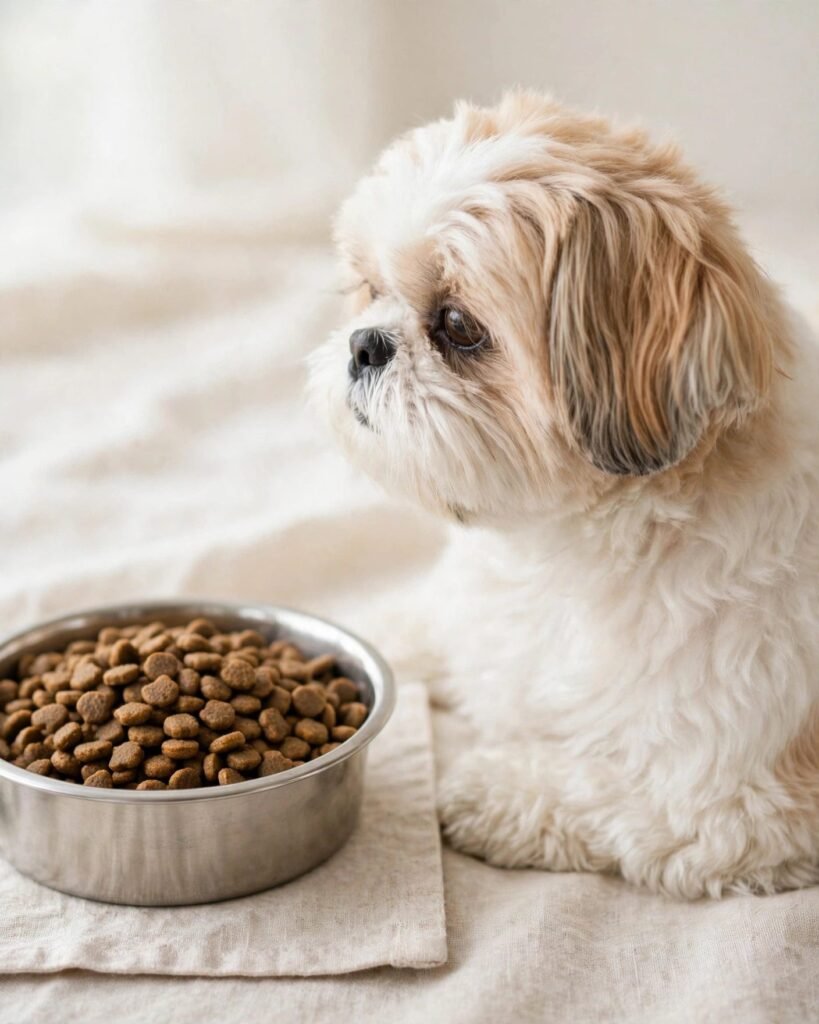
First, rule out the obvious: a dog that suddenly stops eating may be ill, in pain, or stressed — more on that later. But the classic picky Shih Tzu is a healthy dog with a learned habit. The pattern usually goes like this: the dog skips a meal, the owner worries and offers something tastier, the dog eats the tasty thing, and the dog learns that holding out pays. Repeat that a few times and you have a dog that treats kibble like an insult and waits for the good stuff. Add in table scraps, all-day grazing, and treats between meals, and the dog is simply never hungry at mealtime. The fixes below break that cycle — and the first three do most of the work.
The 9 Fixes
1. Feed on a Strict Routine
Same food, same bowl, same spot, same times, every day. Shih Tzus thrive on predictability, and a routine tells your dog when food happens — which also tells them when it does not. Two meals a day, roughly twelve hours apart, is the adult standard. Our shih tzu feeding guide has the full portion chart by age and weight, so you can pair the routine with the right amount. Routine alone fixes a surprising number of “picky” dogs within a week.
2. Stop Grazing — No Food Down All Day
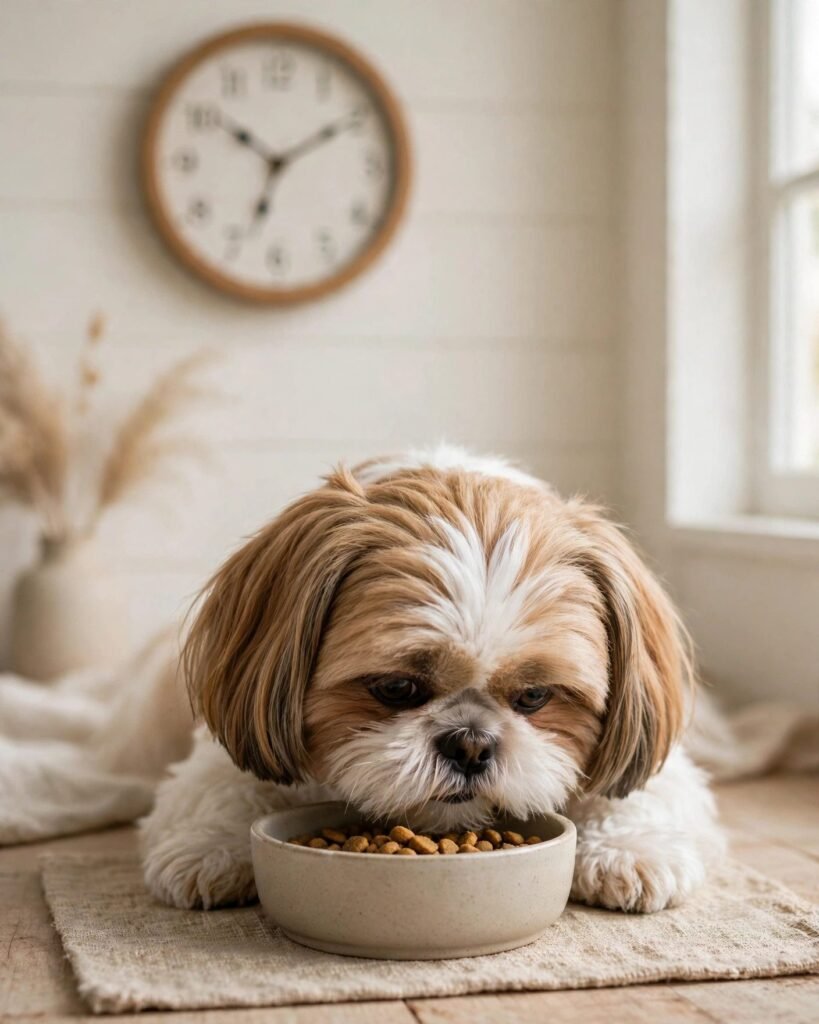
A bowl that sits full all day teaches your dog that food is always available, so there is never a reason to eat now. It also makes it impossible to tell how much your dog actually ate, and it hides appetite changes that matter. Pick the bowl up between meals. A dog that knows food appears twice a day, for a limited time, gets hungry on schedule.
3. Use the 15-Minute Rule
Put the bowl down. Give your dog 15 minutes. Whatever is left after 15 minutes, pick up — calmly, without comment, and without offering anything else until the next meal. No coaxing, no hand-feeding, no swapping the food. A healthy dog will not starve itself: most dogs eat within a day or two of this rule, and almost all eat by day three. This is the single most effective fix on this list, and the hardest for owners, because it feels mean. It is not mean — it is how dogs learn that mealtime is mealtime.
4. Add a Topper — But Keep It Small
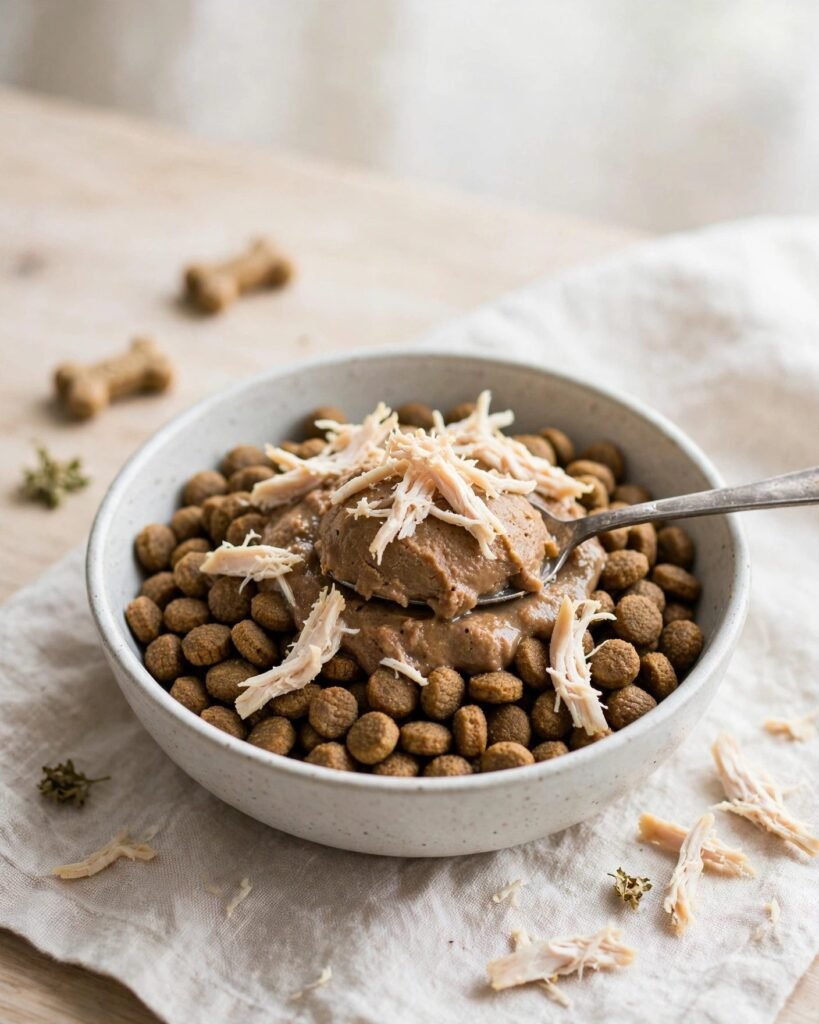
If the 15-minute rule alone feels too strict, a topper bridges the gap: a spoonful of wet food, a little shredded chicken, or a drizzle of low-sodium broth over the kibble. The key word is “little.” A topper should dress the kibble, not replace it — if your dog can eat around the kibble and only lick off the topper, you have made the problem worse, not better. Mix the topper through the kibble so every bite tastes good, and keep toppers under 10% of the day’s food.
5. Warm the Food Slightly
Cold kibble straight from the bag smells like nothing. Ten seconds in the microwave — or a splash of warm water — releases the food’s aroma, and smell is what sells food to a dog. Warm, never hot: test it on your wrist the way you would a baby’s bottle. This trick works especially well for older dogs and for dogs that eat better in winter, when cold food is even less appealing.
6. Cut Out Table Scraps Completely
Every scrap from your plate teaches your dog that better food exists and that holding out is rewarded. It also adds uncounted calories and, for small dogs, real stomach trouble — fatty, salty, or seasoned food upsets them fast. If the whole household is not on board, the fix fails: one family member sneaking chicken under the table undoes a week of routine. Make it a house rule, not just your rule.
7. Exercise Before Meals
A dog that has walked, played, or trained is a dog with an appetite. A short walk or a ten-minute play session before meals works wonders for dogs that “are not interested” in food — especially indoor dogs that spend the whole day on the sofa. Do not exercise hard right after eating, though: let your dog rest for at least 30 minutes after a meal, particularly after a big one.
8. Check for Pain and Dental Problems
A dog that drops food, chews on one side, eats slowly, or suddenly goes off hard kibble may not be picky at all — it may have a sore tooth, gum disease, or mouth pain. Shih Tzus are prone to dental problems because of their small jaws and crowded teeth. If your dog’s pickiness started suddenly, or it prefers soft food to kibble, see your vet for a dental check before you assume it is behaviour. The same goes for nausea, stomach pain, or any change in drinking and toileting.
9. Rotate Proteins — Carefully
Some dogs genuinely get bored of one flavour. Rotating between two or three proteins your dog tolerates — chicken, lamb, fish — can keep meals interesting. But rotate slowly: mix the new food in over a week, and do not change foods every time your dog skips a meal, or you teach the dog that refusing food earns a new menu. One protein change per month is plenty, and only after the routine fixes above are in place.
What NOT to Do
- Do not hand-feed every meal. It works once, then becomes the only way your dog will eat.
- Do not keep switching foods. Every switch teaches your dog that refusal earns novelty.
- Do not leave food down all day. Grazing kills appetite and hides real problems.
- Do not add more and more extras. A bowl that is half toppers is not a meal — it is a negotiation.
- Do not panic after one skipped meal. Healthy dogs skip meals sometimes. Panic is what starts the cycle.
When to See Your Vet
Most picky eating is behaviour, but some of it is medical. See your vet promptly if your dog has not eaten anything for 24 to 48 hours, is vomiting, has diarrhoea, seems lethargic or in pain, is drinking much more or much less than usual, or has lost weight. Sudden appetite loss in a dog that used to eat well is always worth a check-up, and dental pain is the most common hidden cause in this breed. When in doubt, call the vet — a quick visit rules out the serious stuff and lets you focus on the routine fixes with confidence.
Frequently Asked Questions
Why is my Shih Tzu suddenly a picky eater?
If the change was sudden, think medical first: dental pain, nausea, stress, a recent move, or a new pet in the house. If it built up slowly, it is usually learned behaviour — the dog discovered that refusing food earns tastier options. The 15-minute rule and a strict routine fix the behaviour cases; a vet visit rules out the medical ones.
Will my Shih Tzu starve itself if I use the 15-minute rule?
No — a healthy dog will not starve itself with food available. Most dogs eat within a day or two, and almost all eat by day three. If your dog truly eats nothing for 24 to 48 hours, or shows other symptoms like vomiting or lethargy, stop the experiment and see your vet.
Should I switch to wet food for a picky Shih Tzu?
Wet food can help as a topper — a spoonful mixed through kibble makes the meal smell and taste better. But switching entirely to wet food because your dog refused kibble teaches the dog that refusal earns an upgrade, and wet food alone is worse for teeth. Use it as a dressing, not a replacement.
Is it OK to add chicken to my Shih Tzu’s kibble?
Yes, in small amounts. A little shredded chicken mixed through the kibble is a great topper. But keep it under 10% of the day’s food, mix it in so your dog cannot eat around the kibble, and do not let chicken become the only thing your dog will eat.
My Shih Tzu only eats treats — what do I do?
Cut the treats first. A dog full of treats is never hungry for meals, and treats are the most common cause of “pickiness” in small dogs. Stop treats entirely for a few days, run the 15-minute rule, and use a few pieces of kibble from the daily portion as training rewards instead. For the full portion picture, see our shih tzu feeding guide, and for a balanced warm bowl your dog may actually finish, try our homemade dog food for picky eaters.
Final Thoughts
A picky Shih Tzu is usually a well-trained Shih Tzu — trained, by accident, to hold out for better. The fix is not a magic food or a fancy topper. It is a routine: same times, same bowl, 15 minutes, bowl up, no scraps, no panic. Start with the routine and the 15-minute rule, add a small topper if you need a bridge, and give it a week before you judge. Most owners see a different dog by day three — one that eats when the bowl goes down, because the bowl going down finally means something. And if your dog does not, or if anything about the appetite change worries you, your vet is the next call, not another bag of food.
One Comment