
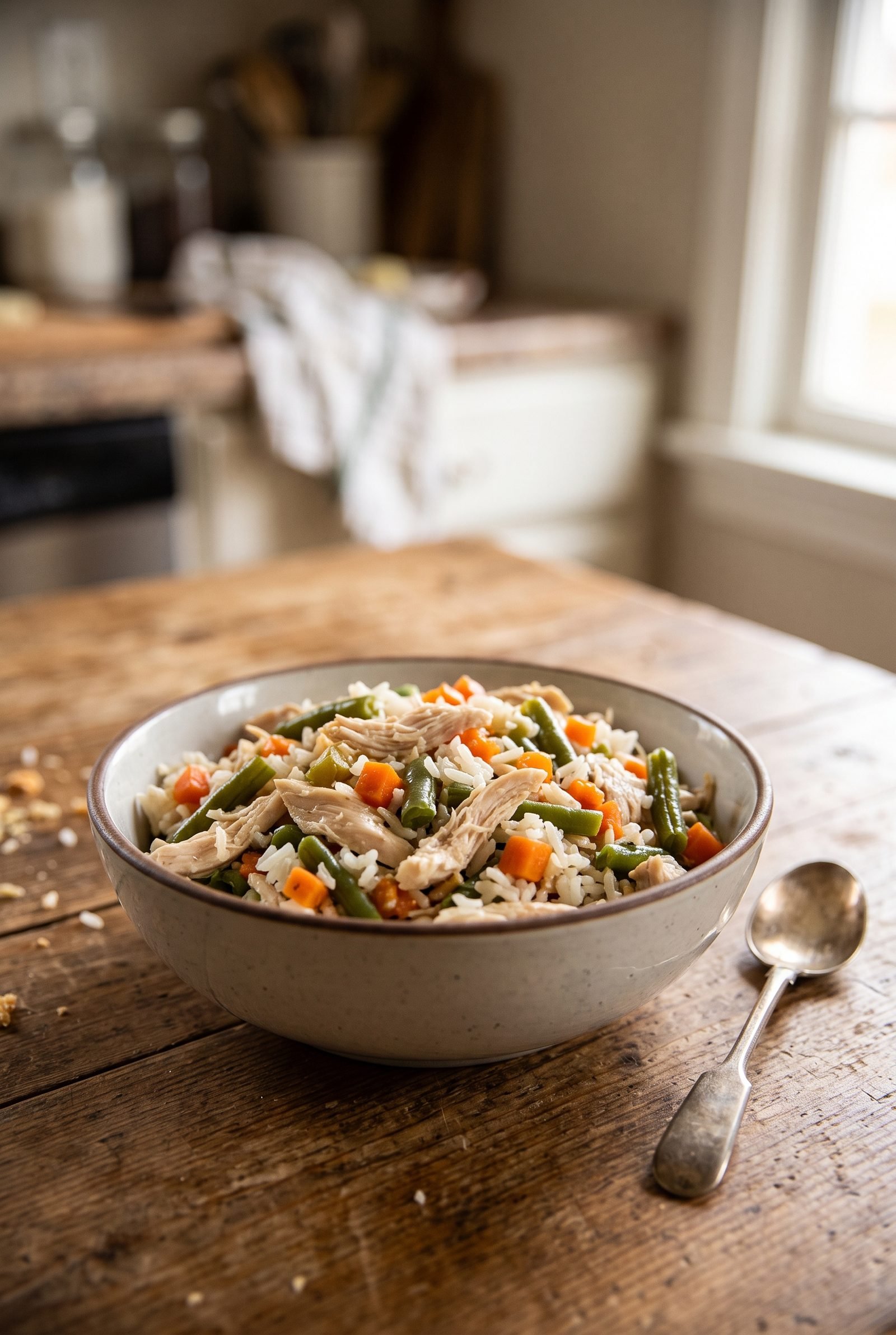
Homemade Dog Food for Picky Eaters: The Warm Chicken & Rice Bowl Fussy Dogs Actually Finish
You know the routine. You set the bowl down, your Shih Tzu trots over, gives it one long sniff… and walks away like you offered a bowl of cardboard. Meanwhile the same dog can hear a cheese wrapper from two rooms away. If that sounds familiar, this homemade dog food for picky eaters is the recipe that finally ended the standoff in our house: gently cooked chicken, soft rice, sweet carrots and green beans, and a spoonful of pumpkin — served slightly warm, the oldest picky-eater trick in the book.
Warm food smells like food. Cold kibble smells like, well, not much. That one small change, plus real ingredients your dog can smell and recognize, is why this bowl gets finished — licked, even — by dogs who normally stage a hunger strike.
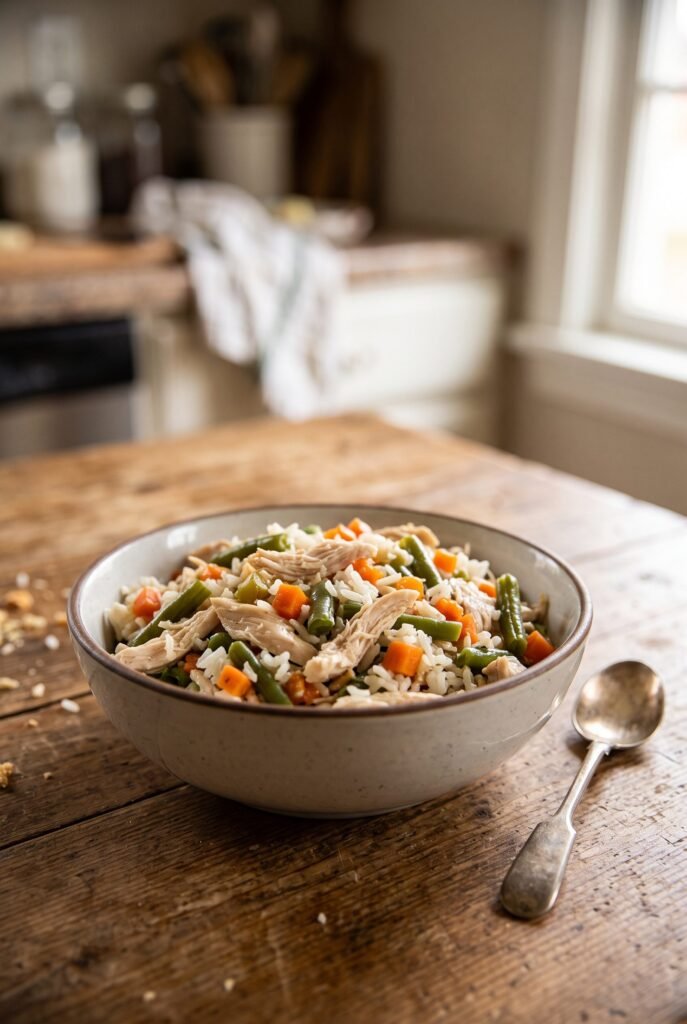
Why This Homemade Dog Food for Picky Eaters Works So Well
Picky dogs are rarely being difficult — usually the food just isn’t giving them a reason to eat. Every part of this recipe fixes that.
The warm serve is the real secret. Warming food gently releases its aroma, and dogs experience the world nose-first. A lukewarm bowl of chicken and rice smells irresistible compared to room-temperature anything — and for a fussy eater, smell is half the sale.
The chicken is lean, familiar, and easy to digest. We shred it finely so small mouths don’t wrestle with chunks, and every shred carries flavor through the whole bowl — no picking out the good bits and leaving the rest.
The white rice is the comfort base. It’s one of the gentlest foods on a dog’s stomach (it’s what vets suggest for bland diets for a reason), and it cooks in the chicken’s own cooking water, so it soaks up all that flavor instead of tasting like plain filler.
The carrots, green beans, and pumpkin bring natural sweetness, fiber, and texture. Pumpkin especially is a quiet hero for small dogs — most love the taste, and it helps keep digestion moving smoothly.Before You Cook: The Picky Eater Checklist
A new recipe is wonderful — but “picky” is sometimes a symptom, not a personality trait. Run through this quick checklist first, because no recipe should paper over a health problem:
- Check the mouth. Dental pain is one of the most common hidden reasons a dog refuses food, especially crunchy food. Look for broken or loose teeth, red gums, heavy tartar, chewing on one side, dropping food, or pawing at the mouth. Mouth pain = vet or dental check, not a new menu.
- Sudden appetite loss is different from lifelong pickiness. If your dog has stopped eating entirely, is skipping meals they used to love, or has lost weight, seems lethargic, or is vomiting or has diarrhea — see your vet first, before trying any recipe. Sudden changes can signal illness, and food tricks should never delay that visit.
- Count the snacks. Some “picky” dogs are simply full. If treats, chews, and table scraps add up through the day, dinner holds no appeal. Cut the extras for a few days and watch appetite return.
- Check the routine. Same flavor for months, food served stone cold, a noisy feeding spot — all fixable. This recipe tackles the first two; a calm, consistent feeding corner fixes the third.
Read This First: What’s NOT in This Bowl
Homemade food is only safe when you know what to leave out. This recipe contains no salt, no onion, no garlic, and no seasoning of any kind — and that is on purpose:
- Onion and garlic are toxic to dogs (in all forms — raw, cooked, powdered). Never add them, and never use stock or broth that contains them.
- Salt and seasonings are unnecessary and can be harmful. Dogs taste food differently from us; plain chicken aroma is already plenty.
- Bones are always removed. This recipe uses boneless chicken only, and we check the shreds by hand — cooked bones splinter and are a genuine choking and injury risk.
An Honest Note: Is This a Complete Diet?
We want to be straight with you, because this matters: this recipe is a gentle, whole-food meal for rotational or occasional feeding, or served as a topper over your dog’s regular food. On its own, it is NOT a complete-and-balanced long-term diet. Like most simple homemade recipes, it’s short on some things dogs need daily — calcium is the most common gap, along with certain vitamins and trace minerals.
If you want to feed homemade every day long-term, do it properly: talk to your vet, or use a vet-formulated nutrient balancer made for homemade diets — a canine multivitamin/balancer product, or finely ground eggshell as a calcium source, are the usual routes. In rotation or as a topper, though, this bowl is a wonderful tool. Just don’t let any simple recipe quietly become an unbalanced full-time diet.
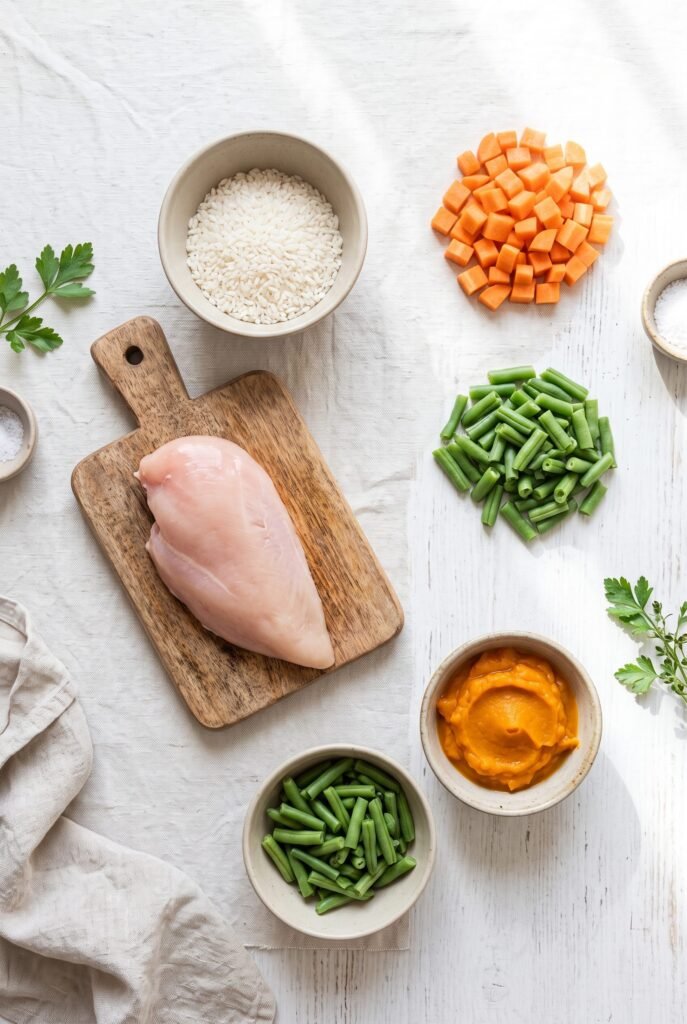
What You Need
Ingredients
| Ingredient | Amount | Notes |
|---|---|---|
| Boneless, skinless chicken breast | 1 lb (450 g) | No bones, no skin, no seasoning |
| Uncooked white rice | 1 cup | Gentle on stomachs; brown rice works as a variation |
| Carrots | 1 cup, finely diced | Small dice cooks soft and fast |
| Green beans | 1 cup, chopped | Fresh or frozen both fine |
| Plain canned pumpkin | ½ cup | 100% pumpkin — NOT pumpkin pie filling |
| Olive oil or salmon oil | 1 tsp (optional) | A finishing touch for flavor and coat-friendly fats |
| Water | As needed | For simmering — it becomes the flavor base |
That’s the whole list. If an ingredient isn’t above, it doesn’t go in — especially nothing from the “never” list in the safety section.
Equipment
- Medium pot with a lid
- Forks or tongs for shredding
- Knife and chopping board
- Measuring cups
- Airtight containers for storage (portion-size ones are ideal)
How to Make This Homemade Dog Food for Picky Eaters, Step by Step
Step 1: Simmer the Chicken
Place the chicken breast in your pot, cover with water, and bring to a gentle simmer. Cook for 15–20 minutes, until cooked through — no pink inside, and 165°F (74°C) on a food thermometer if you use one. Don’t throw that water away: it’s now a light, natural chicken broth, and it’s doing the flavoring in this recipe.
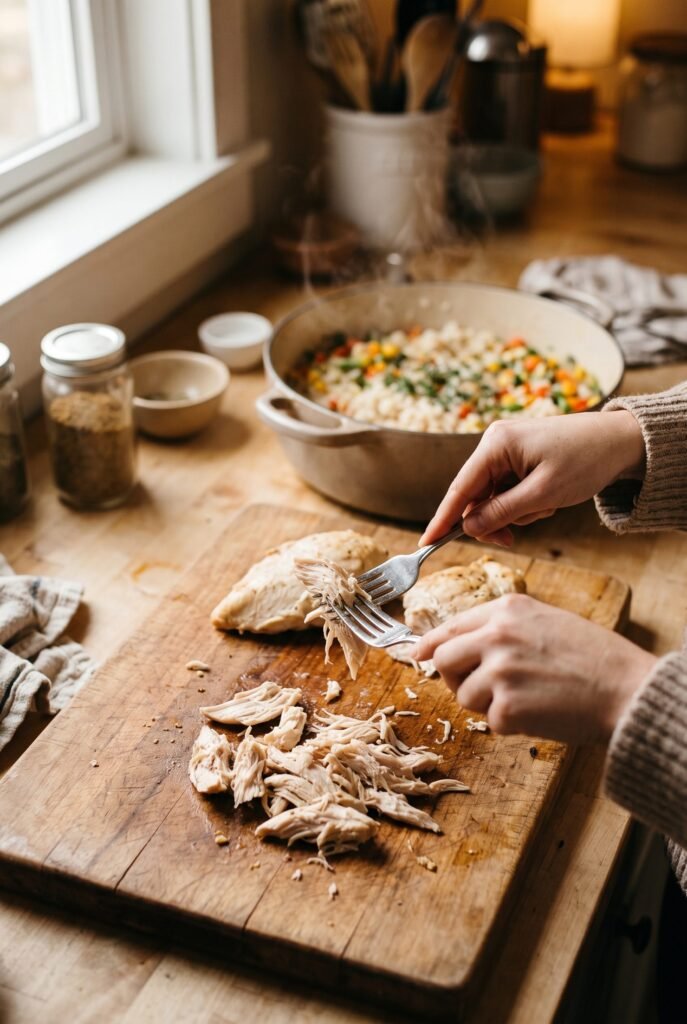
Step 2: Shred It Fine
Lift the chicken onto a board and shred it finely with two forks — smaller pieces than you’d make for yourself. Small dogs have small mouths, and fine shreds mix through every spoonful instead of sitting in big chunks. Run your fingers through the shreds to catch anything that shouldn’t be there.
Step 3: Cook the Rice in the Chicken Water
Measure the rice into the same pot, right into the hot chicken cooking water (top it up with a little fresh water if it has reduced a lot). Simmer with the lid on until soft — about 15–18 minutes. Slightly soft is perfect here; this is comfort food, not al dente.
Step 4: Soften the Vegetables
While the rice cooks, simmer the diced carrots and chopped green beans in a little water until properly soft, about 8–10 minutes (or steam them over the pot). Soft matters: crunchy veg gets picked out and left by picky dogs, and soft vegetables are easier to digest.
Step 5: Bring It All Together
Return the shredded chicken to the pot with the rice, add the soft vegetables, and stir in the pumpkin and the oil if you’re using it. Mix until evenly combined and the pumpkin has coated the rice a warm orange. The texture should be soft and spoonable, not dry — add a splash of warm water if it looks stiff.
Step 6: Cool to Lukewarm — This Step Is the Trick
Let the food cool until it’s warm, not hot — comfortable against the inside of your wrist. This is the temperature that releases all that chicken aroma and tempts a picky eater over to the bowl. Never serve it steaming; hot food can burn a small mouth, and the strongest smells get a suspicious sniff and a walk-away.
Step 7: Serve and Watch It Disappear
Dish up the right portion for your dog’s size (see the table below) and set it down in their usual calm spot. Most of our picky taste-testers don’t need a second invitation with this one.
How to Transition from Kibble in 7 Days
Even gentle food should arrive gradually — a sudden full swap is the fastest route to a gurgly tummy. Mix it in over a week:
| Days | Old food | This recipe |
|---|---|---|
| Days 1–2 | 75% | 25% |
| Days 3–4 | 50% | 50% |
| Days 5–6 | 25% | 75% |
| Day 7 | 0% (or their regular base, if using as rotation) | 100% / topper rotation |
Going slowly lets the gut adjust, keeps stools normal, and lets you spot any ingredient your dog doesn’t agree with while it’s still a small part of the bowl.
How to Store and Reheat This Homemade Dog Food
- Fridge: airtight container, 3–4 days.
- Freezer: portion into small containers or freezer bags, up to 2–3 months. Portioning before freezing means you only ever thaw what a day needs.
- Thawing: move a portion to the fridge overnight — not on the counter.
- Reheating: warm gently (a few seconds in the microwave, or a splash of warm water stirred through) until lukewarm; stir and fingertip-test before serving. Reheating isn’t just safety — it’s the aroma trick, working a second time.
How Much Should I Feed? (Portions by Weight)
One batch makes about 5–6 cups. Use this table as the daily amount (split into 2 meals), but treat it as a rough starting guide, not a prescription — needs vary with age, activity, and body condition. Adjust slowly, and judge by ribs and waistline over a couple of weeks, not day to day.
| Dog’s weight | Rough daily amount |
|---|---|
| 5 lb | About ¾–1 cup per day |
| 10 lb (a typical Shih Tzu) | About 1¼–1½ cups per day |
| 15 lb | About 1¾–2 cups per day |
| 20 lb | About 2¼–2½ cups per day |
If you’re using this recipe as a topper instead, spoon 2–4 tablespoons over the regular food and reduce the base food slightly — the goal is temptation, not a double dinner.
Variations and Picky-Eater Topper Tricks
- Turkey swap: Lean ground turkey works beautifully in place of chicken — simmer it through or brown and drain it first. Same method, same quantities; a smart rotation for dogs who’ve gone lukewarm on chicken.
- Beef and sweet potato version: Swap the chicken for lean ground beef (drained well) and the carrots for diced sweet potato. Richer and heartier — lovely for cooler months.
- Slow-cooker method: Everything goes into the slow cooker with enough water to cover; low for 4–5 hours. Shred the chicken right in the juices, stir, cool to lukewarm, serve. The easiest version of all.
- Brown rice variation: Brown rice works and adds fiber, but cook it longer until properly soft — some sensitive stomachs find white rice gentler, which is why white is the default here.
- Topper tricks for stubborn days: A splash of warm water over kibble to wake up the smell; a spoonful of this recipe (or plain pumpkin) forked through their usual food; or a tiny crumble of freeze-dried liver on top — a pinch, not a handful. These little bridges often convert a kibble-refuser into a bowl-finisher within days.
Common Mistakes to Avoid
- Reaching for the stock cube. Most stock cubes and broths contain onion, garlic, and a load of salt — everything this recipe deliberately leaves out. The chicken’s own cooking water is the only “stock” you need.
- Serving it cold from the fridge. Cold food has almost no smell, and smell is the whole game with a picky eater. Always take the chill off; lukewarm is the magic temperature.
- Serving it too hot. The opposite mistake — steaming food can burn a small mouth. Wrist-test it like baby food.
- Swapping the whole diet overnight. No transition, upset tummy, and a dog who now associates the new food with feeling unwell. Use the 7-day schedule — picky eaters hold grudges.
- Letting a gentle recipe become the entire long-term diet without a balancer. Rotation and topping are perfect; daily forever needs a vet’s input or a nutrient balancer (calcium is the usual gap).
- Free-feeding out of worry. Food left down all day teaches a picky dog that meals are unimportant. Put the bowl down for 20–30 minutes, then pick it up — a gentle routine builds appetite better than an all-day buffet.
Frequently Asked Questions
Why is my dog picky all of a sudden?
A dog who has always been fussy is usually just a dog with opinions — common in small breeds. But a sudden change is different: dental pain, an upset stomach, illness, stress, or even a stale bag of food can switch an eater off. If the change is new and comes with weight loss, lethargy, vomiting, diarrhea, or your dog stops eating entirely, see your vet before reaching for recipes — appetite changes are information, and your vet is the right person to read them.
Can I feed this every day?
As written, this recipe is best for rotational or occasional feeding, or as a topper — it isn’t a complete-and-balanced diet on its own (calcium and some micronutrients are the gaps). To feed homemade daily long-term, work with your vet or add a vet-formulated nutrient balancer made for homemade diets. Many owners also simply rotate this with a quality complete food, which covers the bases painlessly.
How do I transition from kibble to this food?
Gradually, over about 7 days: 25% new food mixed into 75% old for two days, then 50/50, then 75/25, then fully over (or settled into your rotation) by day 7 — the full table is in the transition section above. Slow is kind to the tummy and helps you catch any ingredient your dog doesn’t love while it’s still a small share of the bowl.
Is rice good for dogs?
Yes — plain, well-cooked rice is one of the most dog-friendly grains there is, which is why vets reach for chicken-and-rice as the classic bland diet for upset stomachs. White rice is especially gentle; brown rice adds fiber but needs thorough cooking to be as soft. What dogs don’t need is rice cooked in seasoned, oniony, or salty water — cook it plain, like we do here in the chicken water.
How do I store and reheat leftovers safely?
In the fridge, an airtight container keeps this food for 3–4 days; in the freezer, portioned containers last 2–3 months. Thaw portions in the fridge overnight, then warm gently until just lukewarm, stir well to even out hot spots, and fingertip-test before serving. When in doubt about a portion that’s been sitting, throw it out — a fresh batch is cheap insurance.
Final Thoughts
A picky eater isn’t a problem dog — they’re a dog whose dinner hasn’t made its case yet. Warm, fragrant, real food makes that case: the sniff, the second sniff, and then the sound of a bowl being cleaned. Start with this chicken and rice bowl in rotation or as a topper, serve it lukewarm, and watch the dog who used to walk away from dinner start showing up in the kitchen before you’ve even finished cooking. We know ours do.
Homemade Dog Food for Picky Eaters (Chicken, Rice & Veggies)
Ingredients
Method
- Simmer the chicken in water until cooked through, 15–20 minutes (165°F / 74°C inside). Keep the cooking water.
- Remove the chicken and shred it finely by hand or with two forks, checking for any bone or gristle.
- Cook the rice in the chicken cooking water until soft, about 15–18 minutes.
- Simmer or steam the carrots and green beans until soft, about 8–10 minutes.
- Combine the chicken, rice, and vegetables; stir in the pumpkin and oil.
- Cool to lukewarm and serve warm — never hot. Serve the portion for your dog's size.
One Comment