Shih Tzu Tear Stains: Causes & Removal
If you share your life with a Shih Tzu, you know the look: two rusty-brown streaks running down from the inner corners of the eyes. Tear stains are one of the most common Shih Tzu grooming worries. They are not dirt, and no single product fixes them. They come from how this breed’s face is built, and a gentle daily routine keeps most of them light. This guide covers why they happen, safe removal, prevention, and when to see the vet.

Why Do Shih Tzus Get Tear Stains?
Tear stains happen when tears sit on the face too long.
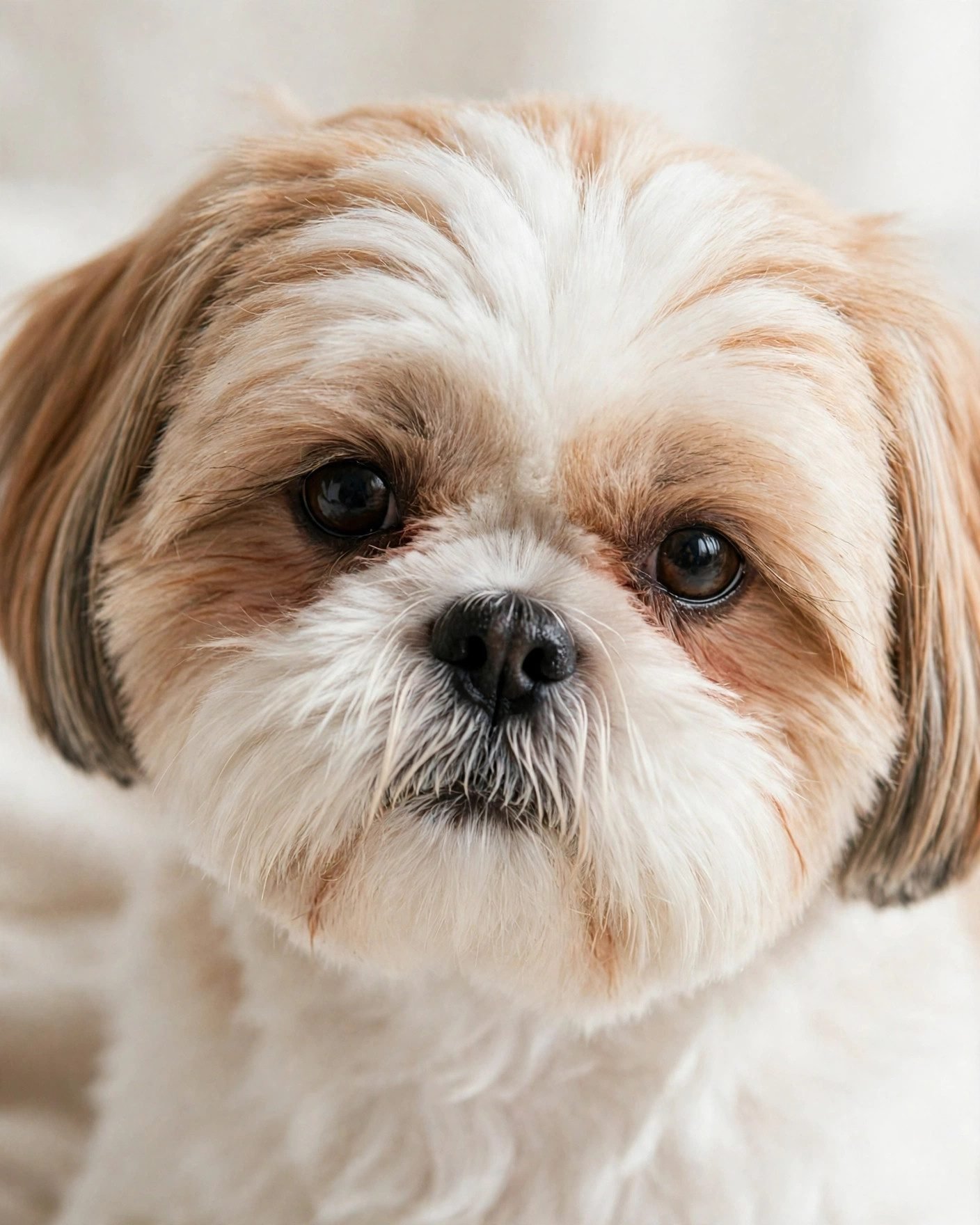
Shallow eye sockets. Shih Tzus have large, round, slightly protruding eyes in shallow sockets, so tears spill over the lower lid instead of draining away.
Hair in the eyes. Face hair grows right up against the eyes, and loose hairs touching the eye surface make it water, spilling more tears onto the face.
Porphyrin in tears. Tears contain porphyrin, a natural iron-containing pigment. When tears dry on light-coloured fur, porphyrin oxidises and leaves a reddish-brown mark — which is why stains show most on white, cream, and gold coats, and barely on dark ones. The colour is chemistry, not dirt.
Diet and water. Minerals in tap water can affect tear composition, and food sensitivities can increase tearing — a real but modest effect, rarely the main cause.
Blocked or narrow tear ducts. Some Shih Tzus are born with narrower tear ducts, or ducts that become blocked, so more tears spill onto the face. This is structural, not a hygiene failure.
Mild staining is normal — aim for a clean, dry, comfortable face.
Causes vs What to Do
| Cause | What it looks like | What to do |
|---|---|---|
| Shallow eye sockets | Light brown streaks under both eyes | Wipe daily; keep the face dry |
| Face hair in the eyes | Watery eyes, worse as face hair grows | Trim hair around the eyes |
| Porphyrin in tears | Rusty-brown colour, strongest on light coats | Wipe tears away before they dry |
| Diet or tap-water minerals | Stains shift when food or water changes | Try filtered water |
| Blocked or narrow tear ducts | Heavy, constant staining | Ask your vet to check the ducts |
| Sudden worsening | Stains appear fast, or discharge changes | See your vet promptly |
The Safe Daily Cleaning Routine
A two-minute wipe every day beats a heavy scrub once a week — and it is far kinder to the delicate skin around the eyes.
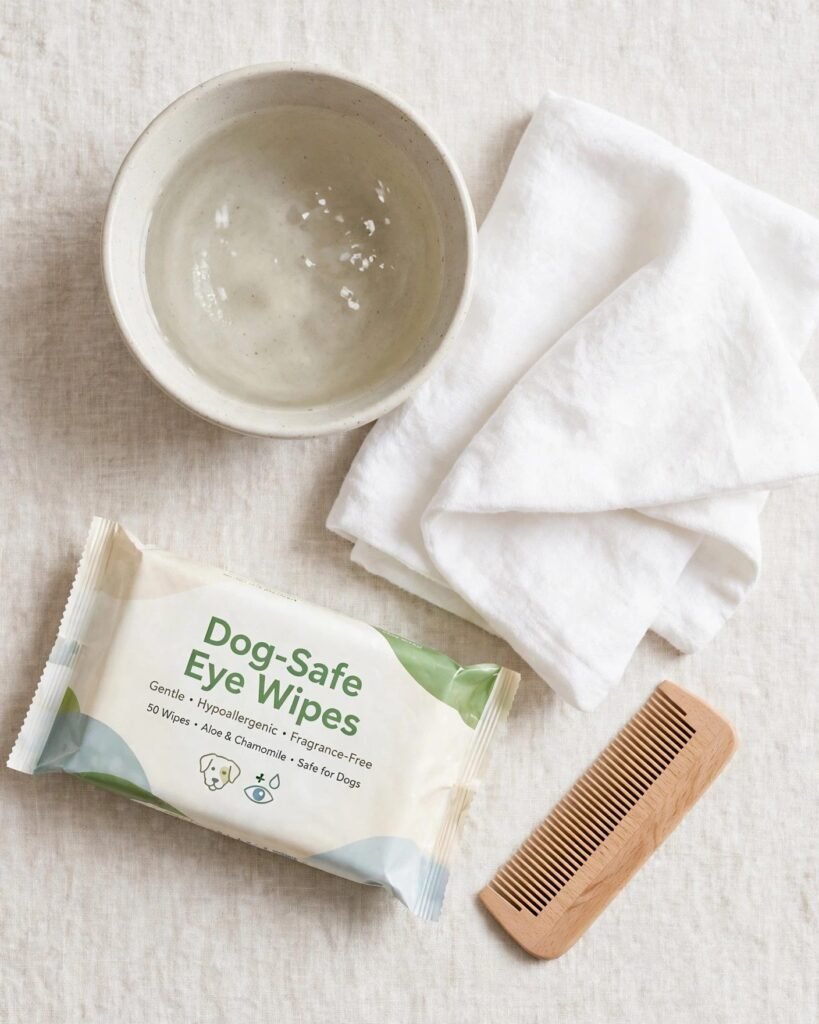
- Start with clean hands and warm water. Wash your hands, then dampen a soft cloth or cotton pad with plain warm water — not hot.
- Wipe gently, outward and down. Hold the cloth on the stain for a few seconds to soften it, then wipe gently downward and away from the eye — never across the eye, and never press on the eyeball.
- Use dog-safe eye wipes if you like. Choose a plain, fragrance-free wipe made for dogs’ eyes, one per eye.
- Dry the face. Pat the area dry with a clean, dry cloth. Tears stain because they sit wet on the fur; a face left damp will stain again just as fast.
- Comb the hair out. Once dry, gently separate the hair under the eyes with a small, fine-toothed comb so wet clumps cannot mat.
Do this once a day — after the morning meal works well. A second evening wipe helps heavy waterers.

What NOT to Put Near Your Shih Tzu’s Eyes
The wrong product near the eyes can cause real harm, and a Shih Tzu’s eyes are already prominent and exposed.
- Never use human products. Human face washes, makeup removers, baby wipes, and eye drops can sting or irritate a dog’s eyes, and some contain ingredients unsafe for dogs.
- Never use bleach, hydrogen peroxide, or whitening chemicals. They appear in old grooming advice and online “hacks,” and can cause chemical burns. No stain is worth risking your dog’s sight.
- Never use antibiotic or medicated products without your vet. Some tear-stain products sold online contain antibiotics, which can mask an infection and delay proper treatment without veterinary guidance.
- Never scrub. Hard rubbing breaks the hair and irritates the skin — and sore skin tears more, making staining worse. Gentle and daily always wins.
Be suspicious of overnight-result promises — real removal is gradual.
Gentle Homemade Options — Keep It Simple
The safest homemade tear stain remover for dogs is the simplest one: plain warm water. It softens dried tears, cannot irritate the eyes, and costs nothing. Everything else people suggest — vinegar, lemon, baking soda, boric acid, peroxide — is too harsh for the eye area. A remedy that stings or burns will make tearing worse, not better.
That is the whole recipe: a damp cloth, then a dry one. The homemade fix that works is the routine — wipe daily, dry thoroughly, and trim the face hair.
Prevention: Stopping Stains Before They Start
Prevention is mostly small habits:
- Keep the face hair trimmed. Keep the hair around the eyes short enough that it cannot touch the eyeball — ask your groomer to tidy the eye area at every groom, and between grooms, a careful trim with blunt-tipped scissors does the same.
- Use clean, fresh water. Some owners find filtered water keeps stains lighter, likely by removing tap-water minerals. It is worth trying, but do not expect miracles from it alone.
- Wipe after meals and drinks. Eating and drinking often trigger watering. A quick wipe after meals keeps the face dry when it matters most.
- Keep the water bowl clean. A dirty bowl can harbour bacteria that irritate the face and eyes. Wash the bowl daily and refill it with fresh water.
- Do not skip grooming. A full groom every 4 to 6 weeks — typically $60–100 in the US — includes a face trim and a wash, and a chance for the groomer to spot eye problems early. Dogs who go months between grooms usually stain more.
When to See the Vet
See your vet promptly if you notice any of these:
- Sudden worsening. Stains that appear quickly, or a dog that never stained much suddenly staining heavily — the cause may be an infection, an allergy, or a blocked duct.
- Redness or swelling. Red, puffy, or swollen skin around the eyes is not a grooming problem.
- Discharge that changes. Tears are clear. Discharge that turns yellow, green, or thick, or develops a smell, can signal infection.
- Pawing, rubbing, or squinting. A dog that paws at its eyes, rubs its face, squints, or keeps one eye closed is telling you the eye hurts.
- Cloudiness or a visible injury. A cloudy eye, a visible scratch, or any eye injury needs veterinary care the same day.
Your vet can check the tear ducts, look for extra eyelashes, test for infection, and rule out allergies. Some causes — a blocked duct, an extra eyelash, an eyelid that rolls inward — are fixable. If a stain does not improve with weeks of gentle daily cleaning, ask your vet.
Frequently Asked Questions
Why does my Shih Tzu have tear stains?
Shih Tzus have large, round eyes in shallow sockets, so tears spill onto the face instead of draining away. Face hair touching the eyes makes them water more, and the porphyrin in tears leaves a rusty-brown mark as it dries. Mild staining is normal and is managed with daily wiping, not cured outright.
How do I remove tear stains from my Shih Tzu?
Wipe daily with a soft cloth dampened in plain warm water, wiping gently downward and away from the eye, then pat the face dry and comb the hair out. Dog-safe, fragrance-free eye wipes work the same way. Trim the face hair so it cannot touch the eyes, and keep the routine up for several weeks — stained hair lightens gradually as clean hair grows in. Never use bleach, peroxide, or human products near the eyes.
Is there a homemade tear stain remover for dogs?
The safest homemade option is plain warm water on a soft cloth — it softens dried tears without any risk to the eyes. Avoid vinegar, lemon, baking soda, boric acid, and peroxide near the eyes. The real homemade fix is the routine: wipe daily, dry thoroughly, and trim the face hair.
When should I take my Shih Tzu to the vet for tear stains?
See your vet if staining worsens suddenly, there is redness or swelling, discharge turns yellow or green or smells, or your dog paws at its eyes, squints, or keeps an eye closed. Your vet can check the tear ducts and rule out infection. Persistent staining that does not improve with gentle daily cleaning is also worth a vet visit.
Final Thoughts
Tear stains are part of sharing life with a Shih Tzu — a small trade-off for those big, round, expressive eyes. They are not a failure, and no miracle product fixes them. They are managed by a two-minute habit: warm water, a soft cloth, a gentle wipe, a thorough dry, and face hair kept short enough to stay out of the eyes. Do that daily, and the stains stay light. And when the stains change — suddenly worse, red, smelly, or painful — skip the grooming aisle and call your vet: that is the moment the stain stops being cosmetic and starts being a message.